“Our Services”
Aksharpath
Aksharpath is a structured learning system that simplifies academic and career decision-making. It breaks down complex pathways into clear stages, combining mentorship, cognitive frameworks, and selective use of technology to build clarity, independence, and long-term direction.
Know More
Global Edge
Global Edge structures the international admissions journey into a coherent system. From profile development to application strategy, each stage is designed with precision, using data-informed inputs and technology-enabled workflows to create aligned and realistic global pathways.
Know More
Research & Advisory
We deconstruct complex problems, analyze core variables, and rebuild solutions that are clear and actionable. Using structured methodologies, data analysis, and AI-assisted tools where relevant, we deliver insights grounded in accuracy, context, and real-world applicability
Know More
Institutional Consulting
We design and implement systems that improve institutional efficiency and long-term outcomes. By simplifying processes, integrating technology, and aligning with execution realities, we build frameworks that are scalable, adaptable, and sustainable.
Know More
Government Consulting
We help government bodies translate policy into functional systems. Our work focuses on simplifying implementation, strengthening frameworks, and introducing technology in alignment with on-ground realities to deliver measurable, scalable impact.
Know More

Aksharpath — Smarter Learning, Better Outcomes
"Know every student. Support every learner."
Most schools collect a lot of student data — test scores, attendance records, assessment results — and then don't quite know what to do with it. Aksharpath changes that. It's an education platform that uses AI and data analysis to build a real picture of how each student is actually learning: what they're good at, where they're getting stuck, and what kind of support would genuinely help them move forward. This isn't about generating more reports or adding another dashboard to the teacher's workload. The point is actionable insight — the kind that tells a teacher or school administrator something useful, something they can act on today.
WHO IT'S FOR:
- Schools and colleges that want to go beyond grade sheets and actually understand learning.
- Educators who are stretched thin and need a faster way to spot which students need attention.
- Administrators trying to make smarter decisions about where to put resources.
- Institutions that take seriously the idea that every student deserves a fair shot — not just the ones who are easy to notice.
What You'll Actually See:
- A clear, real-time view of how individual students are progressing — not just overall, but by subject and skill.
- Early signals when a student is falling behind, before it shows up as a failed exam.
- Specific recommendations — not generic advice — about what a student needs next.
- A fuller picture of student strengths, not just a list of what they're struggling with.
- Better conversations between teachers, students, and parents — grounded in data, not guesswork.
How Aksharpath Works:
Aksharpath pulls together data from across the learning environment — assessments, participation, patterns over time — and looks for what's actually meaningful. It identifies trends that a teacher working with 40 students in a room simply doesn't have the bandwidth to catch on their own. When a student starts to drift, the system flags it early. When a student excels in ways that aren't showing up in traditional testing, it surfaces that too. The recommendations it generates aren't just algorithmic outputs. They're grounded in the actual learning context of the school — the curriculum, the resources available, the realities of how teaching happens. Over time, as more data flows in, the insights get sharper. The system learns, and so does the institution.
What Changes:
Teachers stop relying on end-of-term assessments to figure out who fell behind. Administrators start making decisions about curriculum and staffing that are based on evidence rather than instinct. Students who were quietly struggling get seen sooner. Students who were coasting start getting appropriately challenged. And institutions can demonstrate, in concrete terms, that their approach to student development is working.

GLOBAL EDGE INITIATIVE - International Admissions & Research Exposure
"Not just an application. A body of real work."
Getting into a top university in the US or Western Europe has always been competitive. But the game has changed. Admissions offices aren't just looking at grades and test scores anymore — they're looking for students who have done something genuine, who can point to real intellectual engagement, who have a story that holds up.
Global Edge was built around that reality. It's a structured programme for students — typically from ninth grade onward — who are serious about building the kind of profile that opens doors at world-class institutions. And "building a profile" here doesn't mean coaching students to sound impressive. It means helping them do impressive things.
What Makes It Different:
There are two things that set Global Edge apart from every other admissions prep programme out there. The first is research co-authorship. We connect students with professors, academics, and researchers who are actively working in their field of interest. Students don't just shadow or observe — they contribute. They co-author papers that meet international academic standards. That kind of credential is rare. It signals to admissions committees that a student is capable of real intellectual work, not just good at taking tests.
The second is our US-based presence. We have partners on the ground in the United States — people who understand how admissions offices actually think, what they're looking for in an application, and how to navigate the entire process from preparation through enrollment. That's a meaningful advantage that most India-based consultancies simply don't have.
Who It's For:
- Students from Class 9 onwards with a genuine interest in studying abroad.
- Students aiming for top-ranked universities in the US or Western Europe.
- Learners who want real research experience, not a line on a resume.
- Families willing to invest in a multi-year preparation process.
- Students who want honest guidance, not just someone telling them what they want to hear.
What We Do Together:
- We develop a real strategy — not a generic plan, but one built around the student's interests, strengths, and target schools.
- We identify research opportunities that align with what the student actually cares about.
- We connect them with academic mentors and facilitate co-authored research work.
- We guide every element of the application — SOPs, essays, letters of recommendation — to make sure they're authentic and compelling.
- Our US team helps the student understand the admissions landscape from the inside.
- We support the transition once admission is secured — visas, finances, what to expect.
What Students Walk Away With
By the time a Global Edge student submits their application, they've done things. They've researched. They've written. They've worked with real scholars. Their essays aren't constructed narratives — they're honest accounts of genuine experiences. Admissions committees can tell the difference, and so can the students themselves.
We don't promise admissions. What we do promise is this: we'll put students in the best possible position to compete for the institutions they're aiming for. And we'll do it by building real credentials, not by gaming the system.

RESEARCH & ADVISORY - Getting to the Real Answer
"The problem you think you have is rarely the whole problem."
Organizations — companies, institutions, government bodies — often come to us when they're stuck. They have a challenge they can't quite get their arms around, a decision they're uncertain about, or a situation where they need an outside perspective that's rigorous rather than generic. That's what our research and advisory work is about.
We dig into complex problems the way they actually deserve to be dug into. We don't come in with a pre-packaged framework and slot your situation into it. We start by trying to genuinely understand what's going on — the variables, the stakeholders, the history, the constraints. Then we analyze. Then we tell you what we actually found, including the parts that might be uncomfortable to hear.
Who Needs This:
- Organizations unsure why a strategy or programme isn't delivering what it should.
- Institutions that want honest evaluation of how their work is actually landing.
- Government bodies developing or reviewing policies and wanting evidence-based input.
- Companies considering a new direction and wanting to test assumptions before committing.
- Leadership teams where internal debate has stalled and an outside read is needed.
What We Look At:
- Whether programmes are working — and why or why not.
- Where organizational processes are creating drag rather than momentum.
- How policies are playing out in practice vs. how they were designed to play out.
- Market dynamics, competitive landscape, sector trends.
- Whether a technology or system is actually a good fit for the context it's being dropped into.
- What stakeholders genuinely need, as opposed to what internal teams assume they need.
How We Work:
We start with the problem, not with our methodology. Every engagement begins with a real effort to understand what's actually going on — conversations with the right people, a look at available data, a clear-eyed assessment of what's known and what isn't. We're skeptical of assumptions, including our own.
From there, we build toward a diagnosis. What's driving the situation? What's the root cause versus what's a downstream symptom? Where is leverage? We test our thinking, validate it against what we're seeing on the ground, and refine until we're confident we're pointing at the right things.
The output is a set of recommendations that are specific, grounded, and realistic. We don't write reports designed to impress — we write them to be used. If a client can't act on what we give them, we haven't done our job.
What You Get:
You get a clear answer to a hard question. You get confidence in a direction, or a clear picture of why a direction isn't working. You get specific recommendations with the reasoning behind them — not just what to do, but why, and what trade-offs are involved. And you get it all in a form you can actually use.

INSTITUTIONAL CONSULTING - Systems That Actually Work
"The gap between good strategy and real results is almost always about execution."
We work with institutions — schools, financial organizations, hospitals, government-linked bodies — that have a vision for what they want to achieve but are struggling to build the operational infrastructure to get there. Strategy is the easy part. Getting systems to work consistently, at scale, in the real world — that's where most organizations run into trouble.
Our institutional consulting work is about closing that gap. We come in, understand how things actually function (which is often quite different from how things are supposed to function), and work with your team to design processes and systems that hold up under real conditions.
Where We Focus:
- Process redesign — mapping what's broken and building something that actually flows.
- Data and decision-making infrastructure — making sure the right information gets to the right people at the right time.
- Technology integration — including AI where it genuinely reduces friction, not where it just sounds modern.
- Team capability building — because systems only work if the people running them understand and own them.
- Quality consistency — designing for reliability, not just for best-case scenarios.
- Scalability — building systems that work when you grow, not just when things are small and manageable.
Who We Work With:
- Educational institutions dealing with operational chaos as they try to grow.
- Financial organizations with process inefficiencies that are showing up in costs or errors.
- Government-linked bodies trying to modernize service delivery.
- Any organization where how things get done internally has a direct impact on what people on the outside experience.
How We Approach It:
We spend real time understanding the current state before we recommend anything. That means talking to people at every level — not just leadership — and observing how work actually happens, including the informal workarounds that have developed over time because the formal process doesn't quite work.
Then we co-design solutions with your team. Not for them — with them. The people who have to run a system every day know things that consultants don't, and any system that ignores that knowledge won't last past the engagement.
Technology gets integrated where it makes sense. AI has genuine applications here — in workflow automation, in data analysis, in surfacing patterns that would take a human analyst much longer to find. But we're not in the business of proposing technology for its own sake. If a clearer process and better communication would solve the problem, that's what we recommend.
Throughout the engagement, we're building your team's capability to manage and improve the system without us. That's the whole point. When we leave, things should work better — and keep getting better.
What Changes:
Work gets more consistent. Decisions get made faster and with better information. Staff feel less like they're constantly putting out fires and more like they have processes that support them. And over time, the organization gets better at getting better.
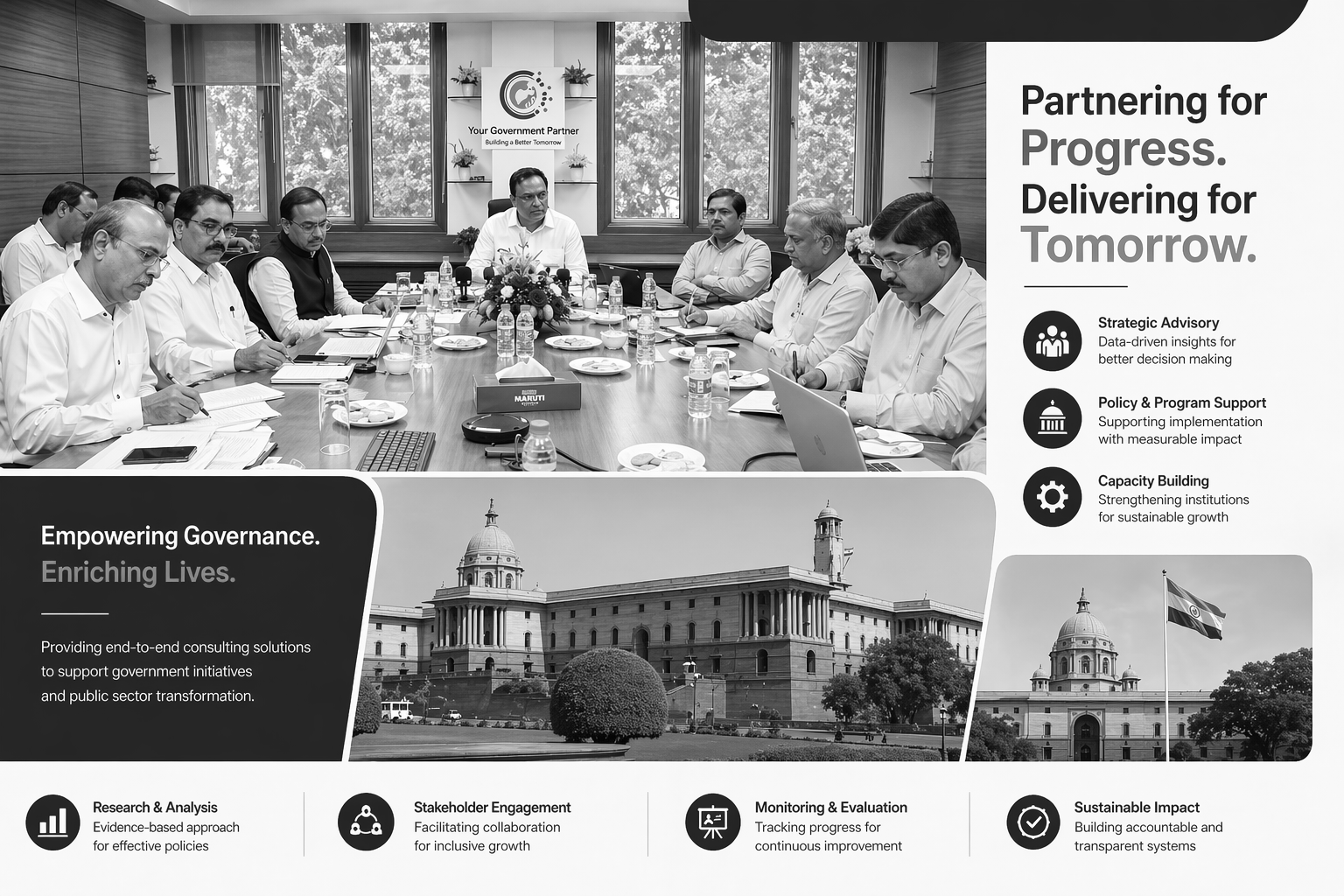
GOVERNMENT CONSULTING - From Policy to What Actually Happens
"Policies don't fail because the intent was wrong. They fail in the execution."
Government bodies face a particular kind of challenge: the gap between what a policy is supposed to do and what it actually does on the ground is often enormous. A programme gets designed at the policy level, then handed off to a department to implement, then filtered through layers of administration, and by the time it reaches the community it was meant to serve, it can look very different from what was originally intended.
We work with government clients to close that gap. Our focus is practical — taking policy intent and translating it into systems and processes that can actually be implemented by the people responsible for running them, in the communities they're serving.
WHO WE WORK WITH:
- Education departments rolling out new programmes or trying to fix ones that aren't landing.
- Health and social service agencies that need to improve how services actually reach people.
- Municipal governments working to make public services more reliable and accessible.
- Regulatory bodies building frameworks that need to work in practice, not just on paper.
- Development agencies trying to scale initiatives without losing what makes them effective.
What We Focus On:
- Programme design that accounts for how frontline staff will actually implement it.
- Process clarity — making sure the people doing the work understand what they're supposed to do and why.
- Staff capability building — policy literacy and operational skill at every level.
- Community feedback systems — because the people a programme is meant to serve know things policymakers need to hear.
- Monitoring that measures what actually matters, not just what's easy to count.
- Coordination across departments that are supposed to work together but often don't.
How We Work:
We start by understanding what the policy is actually trying to achieve — not the official language, but the real intent. Then we map the implementation landscape honestly. What does a frontline worker need to understand to do this job well? What barriers are they going to run into? What incentives are shaping behavior in ways that might cut against the programme's goals?
We design processes that are simple enough to follow consistently, flexible enough to adapt when local context demands it, and transparent enough that communities know what they're getting and why. Technology gets introduced carefully — only where it genuinely makes things easier, not where it adds a new layer of complexity to an already complicated system.
Community voice is a real input here, not a box to tick. The people a programme is meant to serve often have the clearest view of where it's working and where it isn't. We build in mechanisms to capture that feedback and route it back to the people who can act on it.